
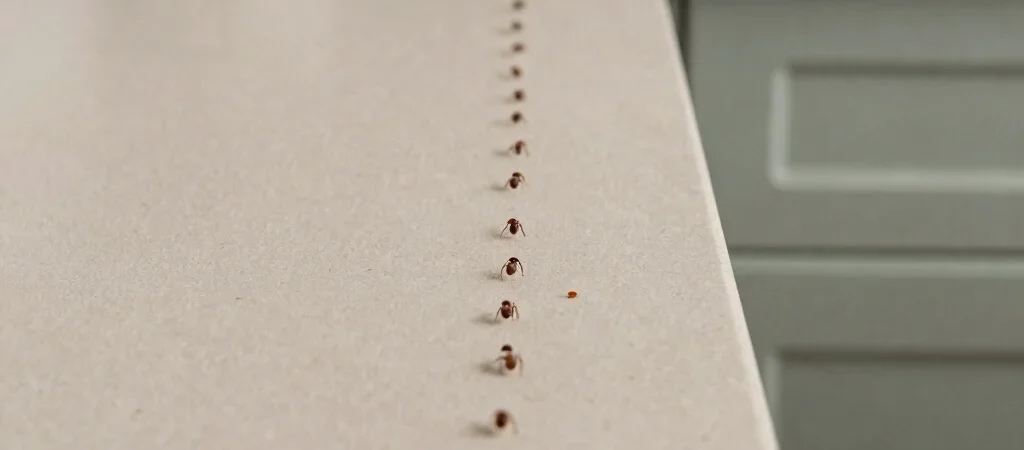
A trail often appears along a familiar route: the edge of a backsplash, a window frame, or the narrow gap beside a pantry shelf. It is a useful clue, but it does not by itself identify the ant or its entry point. The surrounding details matter.
Read the Room Around It
Note where ants appear, what they seem to be reaching, and whether activity shifts between rooms or times of day. A few ants near a forgotten crumb suggest a different context from repeated trails near a damp cabinet or a window. These observations help describe the problem without assuming the first visible trail is the whole story.
Why the Pest Matters
Different ant species can behave differently, so a service plan may depend on identifying which ant is present and where activity is concentrated. A provider may inspect likely travel paths and nearby conditions before describing treatment options. Spraying the visible line alone may not address the reason ants keep using that route.
Useful Questions to Ask
Ask how the provider will identify the ant, which parts of the home they plan to inspect, and what preparation or follow-up they recommend. You can also ask whether the service includes advice about food storage, moisture, or possible entry points. Share what you have observed, including where the trail starts and whether it returns after cleaning.